

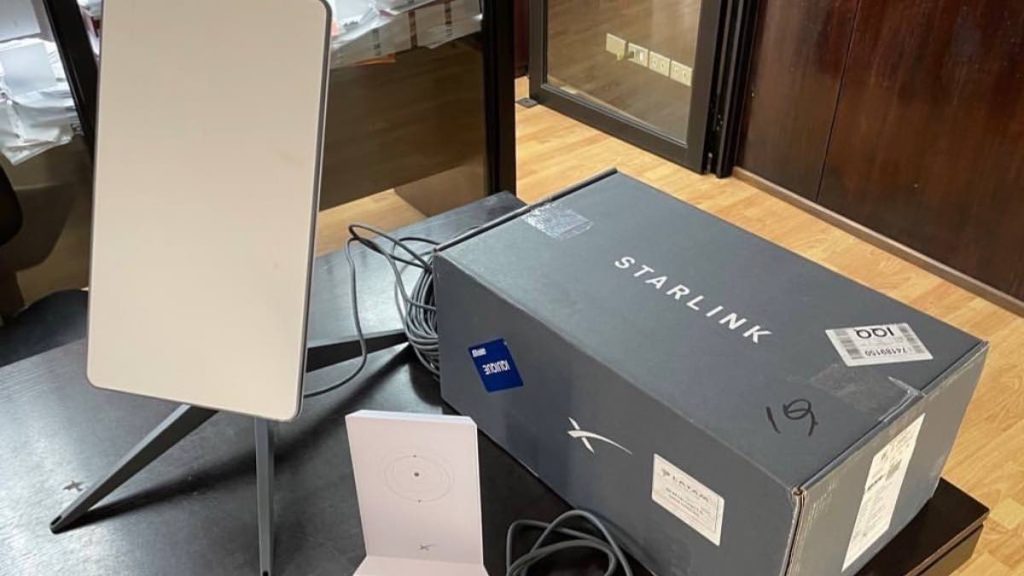
Namibia’s communications regulator has rejected Starlink’s bid to launch satellite internet services in the country, blocking the company’s entry into the local telecommunications market.
The Communications Regulatory Authority of Namibia (CRAN) confirmed in a Government Gazette notice that it declined both a Class Comprehensive Telecommunications Service Licence and a Spectrum Licence applied for by Starlink Internet Services Namibia (Pty) Ltd.
The decision was taken in terms of the Communications Act of 2009, although the regulator did not provide detailed reasons. CRAN said full reasons for the rejection may be requested.
Starlink, a subsidiary of Elon Musk’s SpaceX, had sought approval to roll out fixed satellite internet services nationwide using designated radio frequency bands.
The application indicated that the company has no Namibian shareholding, placing it at odds with policy directives that encourage at least 51% local ownership in telecommunications operators. Regulators, however, retain discretion in determining ownership thresholds.
The rejection halts Starlink’s plans to deploy its low-Earth orbit satellite network in Namibia, where it had positioned itself as a solution to connectivity gaps, particularly in remote and underserved areas.
CRAN said the spectrum application related to frequency bands required for national satellite operations.
The authority added that it may reconsider its decision within 90 days, either on its own initiative or upon petition by an affected party.
The move comes as Starlink continues to expand across Africa and other developing markets, intensifying competition in the satellite broadband space and raising policy questions around market access, ownership and regulation.