

Here is how to fix it.
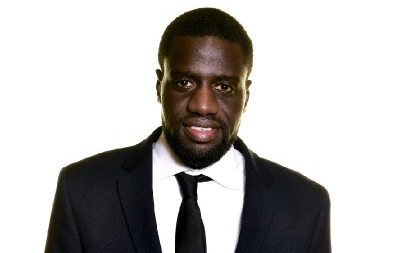
By Gibel Boye
Telecom Namibia has apologised twice in eight weeks. CRAN has summoned them. Businesses lost days.
Citizens lost patience. The conversation that starts now will go the same way every conversation like this goes, unless someone is willing to say the harder thing out loud.
So let me say it. This is not a Telecom Namibia problem. It is an infrastructure problem. And infrastructure problems are not fixed by apologies or by the next modernisation announcement.
They are fixed by changing how the network is built, who is accountable for keeping it running, and what the regulator is allowed to do when it stops.
I spent ten years building Community Fibre in London. We became the UK’s fastest and most reliable broadband network. The lesson from that decade is simple.
The networks that hold up under stress are the ones that were designed for failure from the first day. The ones that fall over are the ones that were designed for the good days only.
Two words get used interchangeably in this conversation, and they should not be. Reliability is whether the network works when you need it, day in and day out. Resilience is whether the network recovers when something breaks.
The April outage was a resilience failure. The slow speeds and dropped connections people complain about most weeks are reliability failures. Different problems, different fixes, but the same root cause. Both come down to how the network was built.
Three things are going wrong in Namibia right now, and all three are fixable.
First, the country is leaning on too few international routes. The April outage happened because two links to South Africa failed at the same time.
That should not be possible on a national network in 2026. WACS, Equiano, the Paratus backbone, these are good cables.
They are not enough on their own. A serious network needs at least four independent international paths and automatic traffic switching when one of
them dies, not twenty four hours of engineers scrambling.
Second, the daily reliability problem is a network design problem, not a power problem. If your towers drop every time the grid drops, that is on you, not on Eskom.
Solar at the base station, lithium batteries that hold eight hours, generators that start themselves. Every serious African operator is doing this now. It is no longer expensive. It is the cost of running a telecom licence in a market where the grid is what it is.
Third, and this is the one that matters most. Telecom Namibia is not really a telecom company anymore. It is the foundation under everything else. Banking. Payments. Logistics. Hospitals. Government services.
When the network is down, the country is down. An outage in 2026 is not a service issue. It is an economic event. The regulator should treat it that way.
Here is what I would do this week, sitting in CRAN, in the operator boardroom, or in government.
CRAN, put reliability and resilience into the licence conditions with real teeth. Minimum uptime, maximum restoration time, transparent incident reporting, and fines that actually hurt when the network fails.
Operators behave when consequences are real.
Government, treat power and route diversity as national infrastructure. Speed up permits. Share towers.
Use blended public and private capital where it makes sense. Stop pretending this is a private sector problem alone.
Telecom Namibia, publish a five-year reliability and resilience plan with named milestones and quarterly public reporting. Let people see the work, not just the press releases. Namibians have earned that.
None of this is theory. The UK went through this shift between 2014 and 2020. Singapore got there earlier.
Rwanda is doing it now. The countries that switched from chasing coverage to building reliable and resilient networks are the ones whose economies pulled ahead. The ones that did not are still apologising.
Namibia is at exactly that fork. The regulator is active. The telco is being held to account. The digital economy is real. Everything you need is here.
The only question left is whether the next decision is to keep expanding, or to start building something that holds. Coverage was the right answer for the last twenty years. Reliability and resilience are the right answer for the next twenty. The operators, regulators and policymakers who get that will decide which African economies are running in 2030, and which are still explaining themselves to their people.
*Gibel Boye is the Founder and Chief Executive Officer of Gesco Group Ltd, a London-registered digital infrastructure company operating across payments integration, e-commerce, hospitality, government technology and transport ticketing in Africa.
He spent ten years at Community Fibre, the operator that built the United Kingdom’s fastest and most reliable broadband network. Gesco Group holds the digital infrastructure contract for the Banjul-Barra ferry corridor in The Gambia and is currently expanding its operations into Southern and East Africa, with active partnership conversations underway across the region. He writes here in a personal capacity.