

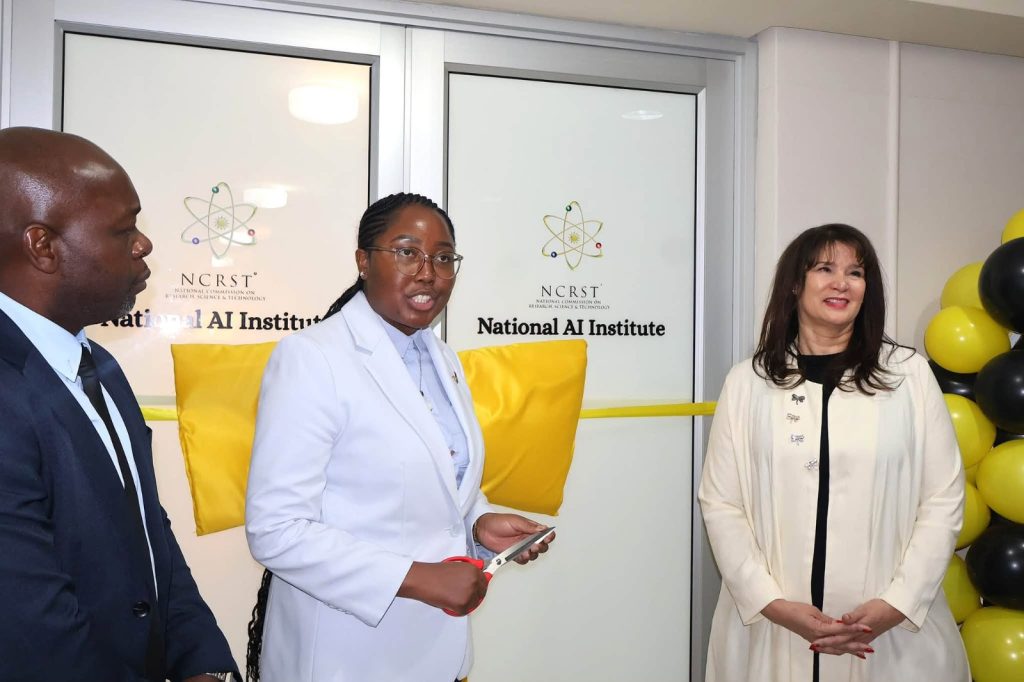
Namibia has launched a National Artificial Intelligence Institute to coordinate AI research, innovation, data development and the deployment of locally developed technology solutions.
The institute was launched in Windhoek on Wednesday by the National Commission on Research, Science and Technology (NCRST), following recommendations by the Presidential Fourth Industrial Revolution Task Force for the establishment of a national institution to coordinate AI research and development and promote responsible applications of the technology.
Minister of Information and Communication Technology Emma Theofelus said the institute would provide a platform for translating Namibia’s digital policy ambitions into practical applications.
“The launch of the National Artificial Intelligence Institute therefore comes at an appropriate time. The Institute creates a dedicated national platform through which capabilities can be developed around artificial intelligence, data, innovation and practical applications,” Theofelus said.
She said the institute will operate through four key centres, namely the Development Centre, Dataset Centre, AI Innovation Centre, and Research and Development Centre.
These will provide an institutional platform for government, businesses, researchers and innovators to develop, test and deploy AI-based solutions to challenges facing the country.
“Its Development Centre, Dataset Centre, AI Innovation Centre, and Research and Development Centre provide an institutional base from which ideas can move towards solutions that can be tested and applied in Namibia,” she said.
Theofelus said one area of focus would be the application of AI in government, including improving digital public services, processing and analysing large volumes of data and improving access to government information.
“For the Ministry of Information and Communication Technology, we are particularly interested in how this capability can contribute to digital government. Citizens should experience digital transformation through services that are easier to access, more responsive and more efficient,” she said.
“The potential application of artificial intelligence in Government ranges from improving how information is organised and accessed to supporting service delivery, analysing large volumes of data and enabling institutions to respond more effectively to citizens.”
The private sector is also expected to use the institute as a platform to develop products, improve business processes and strengthen local technology capabilities.
Theofelus said Namibia’s AI development should be supported by local data and expertise, with technology developed to reflect the country’s languages, economic structure, population distribution and development challenges.
She also called for collaboration between government, telecommunications companies, universities, research institutions and the private sector in developing Namibia’s AI ecosystem.
Theofelus said locally developed technology should ultimately be able to serve markets beyond Namibia, including opportunities presented by the African Continental Free Trade Area.