

By Apolonia H. Ndakolo
Last week, an artificial intelligence tool was introduced at my workplace in the information technology industry.
Although we had received training beforehand, the system was not well received by everyone. Some colleagues preferred the familiar routine, while others felt the tool was too complicated.
This was understandable: workplace change often creates uncertainty. I did not feel threatened, but the experience raised a question Namibia can no longer postpone: are we preparing young people for an economy in which AI will influence almost every workplace?
The most useful question is not whether AI will replace every worker. Technology rarely affects all occupations in the same way.
Some tasks will be automated, many jobs will be redesigned and new roles will emerge. The real issue is whether Namibia will prepare its people to move with that change, or allow disruption to deepen an unemployment crisis already affecting too many young people.
AI and automation are related, but not identical. Automation performs repetitive processes with limited human intervention. AI goes further: it can analyze information, recognize patterns, generate content, make predictions and support decisions.
These technologies are already changing administration, banking, telecommunications, retail, logistics, media, mining, agriculture and health care.
This does not mean every job will disappear. In 2025, the International Labour Organization reported that one in four jobs globally had some exposure to generative AI, but said transformation was more likely than replacement.
AI may handle routine tasks, while people remain responsible for judgement, accountability, relationships, creativity and physical work. Workers who understand these tools will increasingly have an advantage.
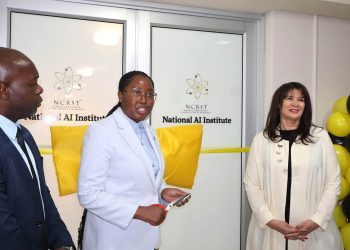
Namibia has started recognizing this challenge. In 2025, the country launched its first UNESCO-supported Artificial Intelligence Readiness Assessment Report.
Coding and AI are also being introduced through pilot education initiatives. But pilots do not amount to nationwide readiness.
A learner in a well-resourced urban school and one in a rural school with weak connectivity or few devices should not enter the future with entirely different chances.
Our education system must move beyond teaching learners only how to operate devices or use basic software. Digital literacy now includes understanding data, protecting privacy, checking information, recognizing bias and misinformation, and using AI without submitting independent thought.
Learners should know what AI can and cannot do, how to give useful instructions, how to evaluate its answers and when human judgement must take priority.
This learning should begin at school in an age-appropriate way, rather than being reserved for university computer science students. Namibia does not need every child to become a programmer. It needs every learner to be confident enough to work with technology, critical enough to question it and adaptable enough to keep learning.
Literacy, numeracy and subject knowledge remain essential because people cannot reliably assess an AI-generated answer without understanding the subject.
Young Namibians will need technical and human skills: digital productivity, cybersecurity awareness and responsible AI use, together with problem-solving, communication, ethical judgement and creativity. The safest skill is the ability to learn as tools change.
AI also offers opportunities Namibia should pursue. Young people can build digital services, automate small-business processes, develop solutions for tourism and agriculture, support local-language technologies and offer services beyond our borders.
New work can emerge in data management, cybersecurity, quality assurance, technology training and the supervision of automated decisions.
However, opportunity will not distribute itself fairly. AI could widen inequality between communities, schools, and workers who receive training and those simply told to adapt.
It may also expose employees to unfair monitoring, biased recruitment and privacy violations. If employers gain productivity while workers carry the risk, public trust will suffer.
Preparation must be a shared national responsibility. Government should turn AI readiness into a practical plan for connectivity, devices, teacher development, curriculum reform and responsible regulation. Universities and vocational centers should update programmes and offer flexible courses for employed people. Employers should retrain staff before roles disappear and explain how new systems will affect their work.
Young people cannot wait for institutions to do everything. They should examine how technology is changing their chosen fields, learn the tools employers increasingly require and practice through projects, portfolios, improved workplace processes or small-business solutions. Certificates matter, but demonstrated ability matters more.
We should welcome useful technology without confusing acceptance with passivity. Namibia will still need artisans, nurses, teachers, farmers, engineers, caregivers and entrepreneurs, but their work will increasingly be supported, measured or organized through digital systems. Digital competence will become part of many occupations, not a separate career category.
The greatest danger is not AI itself. It is waiting until workers are displaced before offering training, or until young people leave school before introducing the tools shaping employment.
Namibia still has time to prepare. If we act now, AI can raise productivity, expand entrepreneurship and create meaningful work. Our young people should enter this future not as spectators or casualties, but as capable workers, creators and decision-makers.