Namibia is seeking to strengthen its capacity to develop locally produced artificial intelligence (AI) solutions as part of efforts to reduce dependence on foreign technologies, support industrialisation and address domestic economic challenges.
Minister of Education, Innovation, Youth, Sports, Arts and Culture Sanet Steenkamp said the country must invest in local research capabilities and technological innovation to ensure emerging technologies respond to the needs of Namibian industries, communities and public institutions.
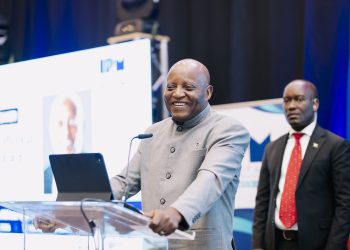
Speaking at the opening of the 2026 National Student Research Symposium (NSRS), Steenkamp said universities and research institutions had a critical role to play in developing technologies that could improve productivity, create employment and support economic diversification.
She said Namibia’s economic future would increasingly depend on its ability to develop knowledge and technological capabilities rather than relying predominantly on its natural resources.
“Namibia’s future prosperity would depend not only on its natural resources, but also on the knowledge and skills of its people,” Steenkamp said.
She said AI presented opportunities to improve efficiency and accelerate innovation in sectors such as agriculture, healthcare, water security, renewable energy and public service delivery.
“Artificial intelligence (AI) offers opportunities to accelerate scientific discovery, improve productivity and support the development of new products and services,” she said.
However, Steenkamp said Namibia needed to strengthen its research infrastructure, digital connectivity and technical skills to take advantage of these opportunities.
She said the Sixth National Development Plan (NDP6) identifies science, technology, research and innovation as important drivers of industrialisation, economic diversification and sustainable development.
Steenkamp called for closer cooperation between government, universities, research organisations and businesses to ensure locally developed technologies could be applied to practical economic challenges.
“Businesses should help identify skills gaps and practical challenges that research can address, while government should create an enabling policy environment and support collaboration,” she said.
She identified manufacturing, food security and renewable energy as sectors where locally driven research could support industrial development and create opportunities for young innovators.
Steenkamp also warned that the increasing use of AI in academic research carried risks relating to inaccurate information, bias, data protection, intellectual property and academic integrity.
“AI can assist a researcher, but it cannot relieve that researcher of the responsibility to think critically, verify evidence and defend conclusions,” she said.
She urged researchers to verify AI-generated information and maintain accountability for their findings.
Meanwhile, Deputy Executive Director for Higher Education, Training, Research and Innovation Lisho Mundia said student research should be aligned with Namibia’s socioeconomic priorities and contribute to practical solutions.
He said the symposium provided an opportunity for students to engage with established researchers, share findings and strengthen collaboration across academic disciplines.
The 2026 symposium is being held under the theme “Harnessing AI to Catalyze Transformative Research: Empowering the Next Generation of Innovators.”