

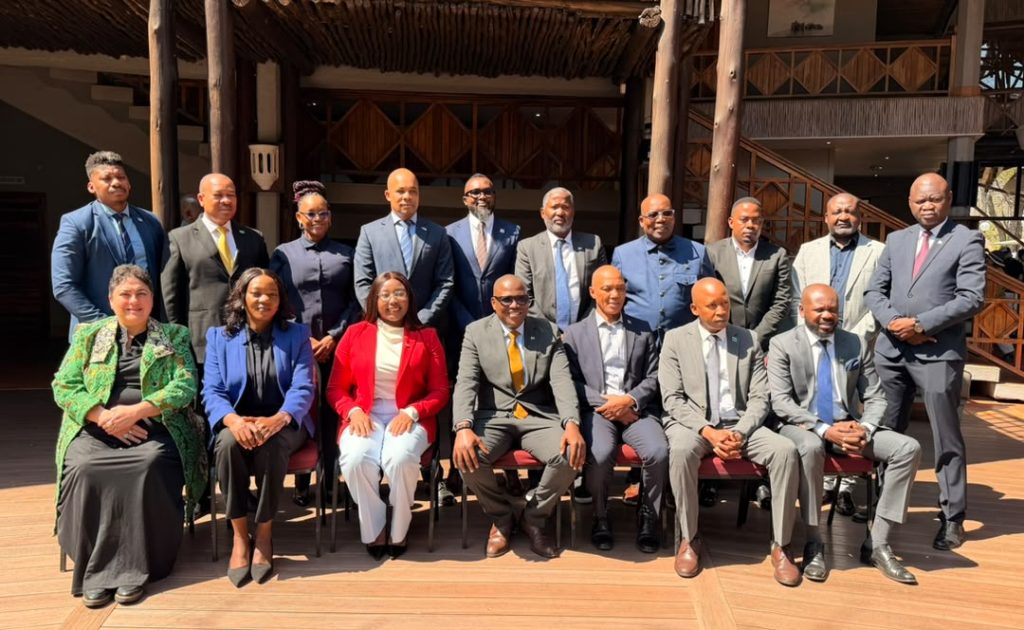
Namibia and Botswana have expanded their digital partnership with a new ICT cooperation agreement focused on cross-border fibre connectivity, cybersecurity, digital infrastructure and emerging technologies, as both countries seek to accelerate regional digital transformation.
The Memorandum of Understanding (MoU), signed in Kasane, Botswana, establishes a framework for cooperation in broadband infrastructure, digital government, ICT regulation, innovation, research, artificial intelligence, cybersecurity and digital skills development.
The agreement builds on existing collaboration between Mobile Telecommunications Limited (MTC) and Botswana Fibre Networks (BoFiNet), which established the first direct fibre-optic link between Namibia and Botswana to improve regional connectivity and data traffic.
Botswana’s Minister of Communications and Innovation, David Tshere, said the partnership is designed to deliver practical digital projects that support economic diversification and technology-driven growth.
“Digital transformation and ICT present one of the most important opportunities to achieve this diversification, create employment, promote innovation and improve the lives of our citizens,” Tshere said.
He said cybersecurity would be a major focus of the partnership as cyber threats increasingly target governments, businesses and critical infrastructure across the region.
“Cyber threats do not respect national borders, and our response must therefore include information sharing, skills development, institutional cooperation and strengthened collective resilience,” he said.
Botswana recently enacted the Cybersecurity Act, 2025 and the Digital Services Act, 2025 to strengthen digital trust, support fintech growth and improve the security of online services.
Namibia’s Minister of Information and Communication Technology, Emma Theofelus, said the agreement will strengthen regional digital integration through joint projects, knowledge sharing and infrastructure development.
“Continued investment, infrastructure expansion, innovation, and sustainable business models remain critical to achieving inclusive digital transformation,” Theofelus said.
Implementation will be driven by joint technical working groups focusing on broadband infrastructure, cybersecurity, digital public services, innovation, research, digital skills and emerging technologies.
Botswana is also expanding nationwide broadband coverage through its Universal Access and Service Fund and the SmartBots Programme, with more than 228 villages already upgraded from 3G to 4G connectivity.
The country’s Digital Economy Roadmap targets increasing the ICT sector’s contribution to 20% of GDP, positioning digital technologies as a major driver of future economic growth.
“We therefore see ICT not merely as an enabler of other sectors, but as a sector of economic production in its own right,” Tshere said.
The agreement signals growing efforts by both governments to build shared digital infrastructure, strengthen cyber resilience and create a more integrated digital economy across Southern Africa.