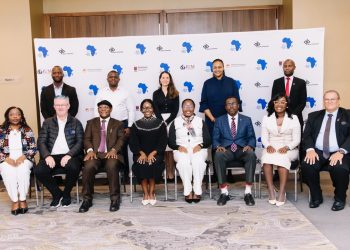

Namibia has taken a major step towards digitalising environmental governance with the launch of a new national platform that centralises environmental data into a single digital system.
The Multilateral Environmental Agreements (MEA) Monitoring and Reporting Platform, developed by the Ministry of Environment, Forestry and Tourism (MEFT), is more than just a reporting tool. It is a national environmental data platform designed to improve how information is collected, shared and analysed to support government decisions.
For years, environmental information has been spread across multiple ministries, universities, research institutions and development partners. The new platform brings those datasets together into one government-managed system, creating a single source of truth for environmental information.
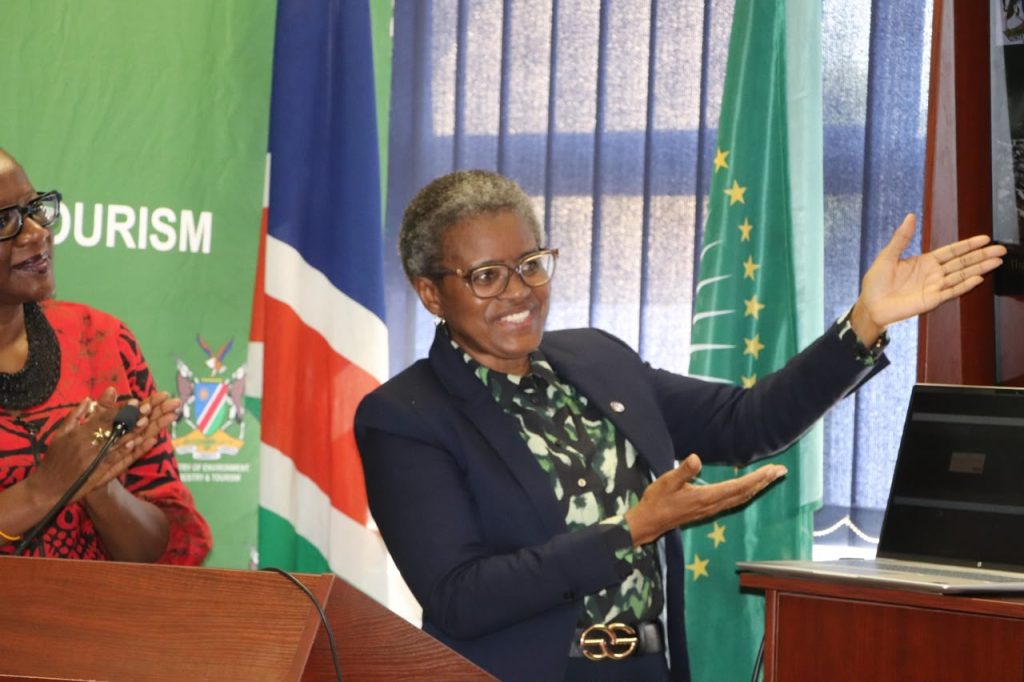
Environment, Forestry and Tourism Minister Indileni Daniel said the platform will support planning, research, policymaking and Namibia’s international environmental reporting obligations
“The platform being launched today is a Government resource owned by the Ministry of Environment, Forestry and Tourism. It brings environmental information into one place and presents it in a form that can support planning, research, decision-making and national reporting,” she said
A digital platform for environmental intelligence
The platform functions as a digital environmental intelligence system.
Instead of relying on disconnected spreadsheets, reports and databases, policymakers will be able to access consolidated information on biodiversity, climate change, forests, land degradation and natural resources from a single platform.
This allows government to monitor environmental trends in near real time, identify gaps in conservation programmes and make faster, evidence-based decisions.
The Department of Environmental Affairs will maintain and update the system to ensure the information remains accurate and aligned with Namibia’s environmental priorities.
Why it matters
As governments increasingly adopt digital technologies, data has become as important as physical infrastructure.
Without reliable data, policymakers cannot accurately measure environmental change, assess whether policies are working or demonstrate compliance with international environmental agreements.
The platform also reduces duplication by allowing multiple institutions to contribute to and access the same information rather than maintaining separate datasets.
Daniel said reliable information is essential as Namibia responds to climate change, biodiversity loss and land degradation.
“When land is degraded, biodiversity is lost, livelihoods are weakened and communities become more vulnerable to drought and climate change. Our response must therefore be coordinated and supported by reliable information,” she said.
Connecting research with government
A key feature of the platform is its ability to bridge the gap between scientific research and public policy.
Developed in partnership with the University of Namibia under the Namibia Integrated Landscape Approach for Enhancing Livelihoods and Environmental Governance (NILALEG) Project, the platform enables research generated by universities and scientific institutions to feed directly into government planning.
“The platform also strengthens the link between science and policy. Universities and research institutions generate knowledge, train specialists and help address important data gaps. Government identifies national priorities and turns evidence into policy and action,” Daniel said.
Building Namibia’s environmental digital infrastructure
Beyond improving reporting, the platform forms part of Namibia’s growing digital public infrastructure.
It creates a foundation for data-driven environmental management, supports collaboration between government and academia, and improves transparency by making environmental information more accessible.
MEFT plans to continue developing the platform after the NILALEG Project ends, with the long-term ambition of establishing it as a regional centre of excellence for environmental data, digital innovation and evidence-based policymaking in Africa.