

TechNews Namibia: Namibia’s Top Tech & Startup News
  • AI
  • Cybersecurity
  • Ecommerce
  • Features
    • Reviews
  • Fintech
  • Technology
  • Telecommunication
  • Forum
  • Jobs
    • Job Dashboard
    • Post a Job
No Result
View All Result
SUBSCRIBE
TechNews Namibia: Namibia’s Top Tech & Startup News
  • AI
  • Cybersecurity
  • Ecommerce
  • Features
    • Reviews
  • Fintech
  • Technology
  • Telecommunication
  • Forum
  • Jobs
    • Job Dashboard
    • Post a Job
No Result
View All Result
TechNews Namibia: Namibia’s Top Tech & Startup News
No Result
View All Result
Home AI

Navigating the AI landscape: ChatGPT vs. DeepSeek

by admin
February 24, 2025
in AI
58
0

By Stantin Siebritz

In the dynamic world of artificial intelligence, two prominent names often surface: ChatGPT and DeepSeek. While ChatGPT has gained widespread recognition for its polished conversational abilities, DeepSeek is making waves with its open-source approach.

Let’s break down what makes these two AI systems unique and explore the implications of DeepSeek’s decision to open-source its model.

ChatGPT: The Polished Proprietary Model

Developed by OpenAI, ChatGPT is renowned for its sophisticated conversational capabilities. As a proprietary model, its inner workings—such as the source code, training data, and algorithms—remain confidential. This closed-source approach offers several advantages:

•      Quality Control and Security: OpenAI can implement stringent quality control and security measures, ensuring a stable and refined product.

•      User Experience: Users benefit from a seamless experience, with updates and improvements managed by a dedicated team.

However, this approach also has its drawbacks. The lack of transparency means users and researchers must trust the company’s assurances regarding bias mitigation, data privacy, and ethical use.

DeepSeek: A Community-Driven Alternative

In contrast, DeepSeek has chosen to open-source its model. Open sourcing means that the underlying code and design are available to anyone. This approach has significant implications:

•      Transparency: The community can scrutinize the model for biases, security vulnerabilities, or flaws, fostering trust and accelerating improvements through community contributions.

•      Democratized Innovation: Smaller organizations and independent developers can experiment with cutting-edge AI without the high costs associated with proprietary systems, spurring creative applications and research breakthroughs.

However, open sourcing is not without challenges. The risk of misuse is a concern, as malicious actors could adapt the model for harmful purposes. Additionally, open-source projects may face coordination issues, inconsistent updates, or fragmentation if different groups fork the project in divergent directions.

The Future of AI: Balancing Transparency and Control

DeepSeek’s decision to open-source its model highlights a broader philosophical debate in the AI community: Should the benefits of transparency and community collaboration outweigh the potential risks of misuse and lack of centralized control?

Proponents argue that open-source models drive innovation, enable robust peer review, and create a level playing field. Critics caution that without sufficient oversight, these models might inadvertently spread biases or be repurposed in ways that compromise user privacy or security.

In summary, both ChatGPT and DeepSeek offer valuable approaches to AI development. ChatGPT’s proprietary model provides a polished product with robust safeguards, while DeepSeek’s open-source strategy champions transparency and community-driven innovation.

The choice between them depends on your priorities: if you value a turnkey solution, ChatGPT might be the better choice; if you prefer to be part of an evolving, collaborative community, DeepSeek’s open-source model could be the way forward. Understanding these models helps us navigate the fascinating future of AI with greater confidence and insight.

*Stantin Siebritz is the Managing Director of New Creation Solutions, a software engineer and an Artificial Intelligence specialist.

Recommended For You

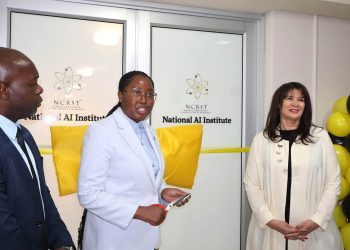
Namibia launches AI institute to drive research, innovation

Namibia launches AI institute to drive research, innovation

by reporter
September 24, 2026
0

Namibia has launched a National Artificial Intelligence Institute to coordinate AI research, innovation, data development and the deployment of locally developed technology solutions. The institute was launched in...

Shadow AI, Agentic AI, and the work Namibian boards haven’t started

AI can copy your voice. How can Namibia protect creative livelihoods?

by reporter
September 24, 2026
0

By Chisom Obiudo A single recording session could give a voiceover artist an unexpected competitor: a digital copy of their own voice. A Windhoek artist might record a...

The real digital divide may begin before a child ever touches a screen

The real digital divide may begin before a child ever touches a screen

by reporter
September 22, 2026
0

By Dr Etuna Simon A child sits in a classroom. A question appears on the board. Before the child has finished thinking, an answer can already appear on...

Shadow AI, Agentic AI, and the work Namibian boards haven’t started

AI is already at employees’ desks. Is your board ready to govern AI?

by reporter
September 9, 2026
0

By Chisom Obiudo A confidential board pack can leave the organisation in seconds. All it takes is an employee uploading it to an external AI tool for a...

Beyond 6th grain: Namibia has alternatives for AI- driven agriculture

Beyond 6th grain: Namibia has alternatives for AI- driven agriculture

by reporter
September 3, 2026
0

By Oswald Siku Mughongora Namibia’s termination of the approximately US$2.4 million agreement with American technology company 6th Grain Corporation should not be interpreted as a retreat from artificial...

Related News

Your website is now a source, not a destination

Your website is now a source, not a destination

September 2, 2026
Shadow AI, Agentic AI, and the work Namibian boards haven’t started

AI can copy your voice. How can Namibia protect creative livelihoods?

September 24, 2026
Group of eight professionals in business attire on a stage beside an easel with a DigiNam sign, posing for a photo at a formal event.

Namibia legally recognises electronic signatures under new framework

August 31, 2026

Browse by Category

  • AI
  • Cybersecurity
  • Ecommerce
  • Features
  • Fintech
  • Technology
  • Telecommunication
  • Jobs
  • Job Dashboard
  • Post a Job
  • Register
  • Log In

Welcome Back!

Sign In with Google
OR

Login to your account below

Forgotten Password? Sign Up

Create New Account!

Sign Up with Google
OR

Fill the forms below to register

All fields are required. Log In

Retrieve your password

Please enter your username or email address to reset your password.

Log In
No Result
View All Result
  • Jobs
  • Job Dashboard
  • Post a Job
  • Register
  • Log In

Skip to toolbar
  • About WordPress
    • WordPress.org
    • Documentation
    • Learn WordPress
    • Support
    • Feedback
  • Log In
  • Register