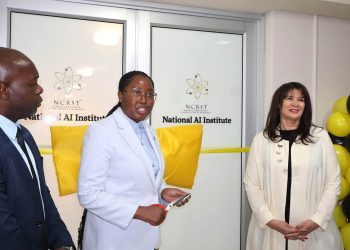


Namibia faces significant challenges in its artificial intelligence (AI) development, including a lack of specialised skills, outdated educational frameworks, and gaps in the legislative and regulatory environment, an official has revealed.
According to the National Commission on Research, Science and Technology (NCRST) CEO, Anicia Peters, challenges related to data centres, energy and telecommunications, along with funding issues and data poverty, impede progress.
Peters highlighted these issues while emphasising AI’s potential to drive national growth.
“Namibia faces challenges like digital divides and job losses, yet there are opportunities. With 71% of the population under 35, there is potential for rapid upskilling. AI doesn’t require degrees but skills, and Namibia’s innovative spirit, along with existing infrastructure like mobile networks and high-performance computing centres, offers a solid foundation,” she said.
The shortage of specialised AI skills is a significant concern, alongside the urgent need for educational reform.
“Namibia’s institutions, such as the Namibia University of Science and Technology (NUST), are beginning to offer AI degrees, but more comprehensive reforms are needed. We already have a virtual institute for AI at UNAM, supported by NCRST funding. Educational reforms are underway to better prepare our youth for careers in AI,” she noted.
Peters said infrastructure remains a critical challenge as Namibia needs to enhance its data centres, energy supply, and telecommunications networks to effectively support AI development.
The country is also working on improving funding mechanisms and addressing data poverty, which hampers the effective use of AI technologies.
“Legislative and regulatory frameworks are still developing. The national AI working group, consisting of government ministries, agencies and universities, is focused on creating a cohesive AI innovation strategy. This includes establishing a national AI institute dedicated to hands-on training and the development of AI innovation and research centres,” Peters said.
She underscored the importance of these efforts, noting that the national AI working group is tasked with creating a strategy that incorporates hands-on training and R&D centres.
“By targeting unemployed youth and offering boot camps, Namibia seeks to cultivate a homegrown AI talent pool. Ultimately, Namibia’s AI journey presents opportunities for economic growth and technological advancements, but careful attention is needed to ensure ethical and human-centred AI development,” she said.
AI also presents ethical challenges, particularly the need for human-centred AI that reflects local cultures and values.
Peters stressed the importance of addressing these ethical considerations while advancing technological capabilities stating: “AI must be designed to fit our national and regional context.”
She said the future strategy includes leveraging AI for scientific solutions and industrialisation, particularly in sectors like green hydrogen and critical minerals.
“For instance, the Green Industrialisation Blueprint for Namibia outlines future manufacturing and green hydrogen strategies, as well as plans for critical minerals. This blueprint is a crucial document that reveals our direction in various sectors, including oil and gas, which is also part of the emerging opportunities,” she explained.
Peters emphasised the potential of Namibia’s telecommunications infrastructure, highlighting progress toward 5G as a significant advantage.
“We already have extensive mobile networks, so we have the infrastructure in place. However, we need to be mindful of energy and water requirements, as they are crucial for cooling systems, among other things. At NUST and UNAM, we have existing high-performance computing centres that are currently underutilised. This presents us with numerous opportunities to do more,” she said.
AI holds substantial potential in production and manufacturing environments, yet this area remains largely unexplored.
She noted manufacturing facilities and related industries stand to benefit greatly from AI integration, whether in production environments, telecommunications or adjacent fields like tourism.
“AI’s impact spans across all sectors and does not discriminate. The potential for startups and entrepreneurs in this space is immense,” she added.