

The Communications Regulatory Authority of Namibia (CRAN) says the country’s Information and Communication Technology (ICT) sector attracted investments worth N$1.2 billion over the past year, with its contribution to Gross Domestic Product (GDP) estimated at 2.5%.
Speaking at the Digital Transformation and Entrepreneurship Business Breakfast, CRAN’s Executive for Economics and Market Development, Helene Vosloo, said telecommunications licensees alone generated N$1.6 billion in revenue, while broadcasting contributed nearly N$1 billion.
“In the last quarter, the total revenue from telecommunications licenses was N$1.6 billion. This is a huge sector. Broadcasting licenses generated almost N$1 billion in the previous year, while total investment in the ICT sector amounted to N$1.2 billion. The sector’s contribution to GDP in real terms is 2.5%,” she said.
Vosloo added that Namibia currently has 58 commercial telecommunications licensees, alongside nonprofit operators, commercial and community broadcasters, and one postal licensee.
She noted that active SIM cards now stand at 2.6 million, representing 86% of the population, down from 120% in previous years due to SIM registration requirements and revised operator packages that allow users to recharge existing cards instead of purchasing multiple SIMs.
Mobile broadband users stand at 1.6 million, while fixed broadband subscribers total around 100,000.
She also pointed to the rapid expansion of fibre connections, which have reached 44,000 and are growing by 6–10% annually.
The Ministry of ICT has set a new standard requiring broadband access to meet speeds of at least 25 Mbps.
“Since contributions are still measured using voice, it appears as though the sector’s contribution to GDP is not very strong. However, if you look at the revenue generated by the industry, the contribution is actually very high,” Vosloo said.
Vosloo further highlighted that despite a 91% coverage rate, some rural areas remain without connectivity.
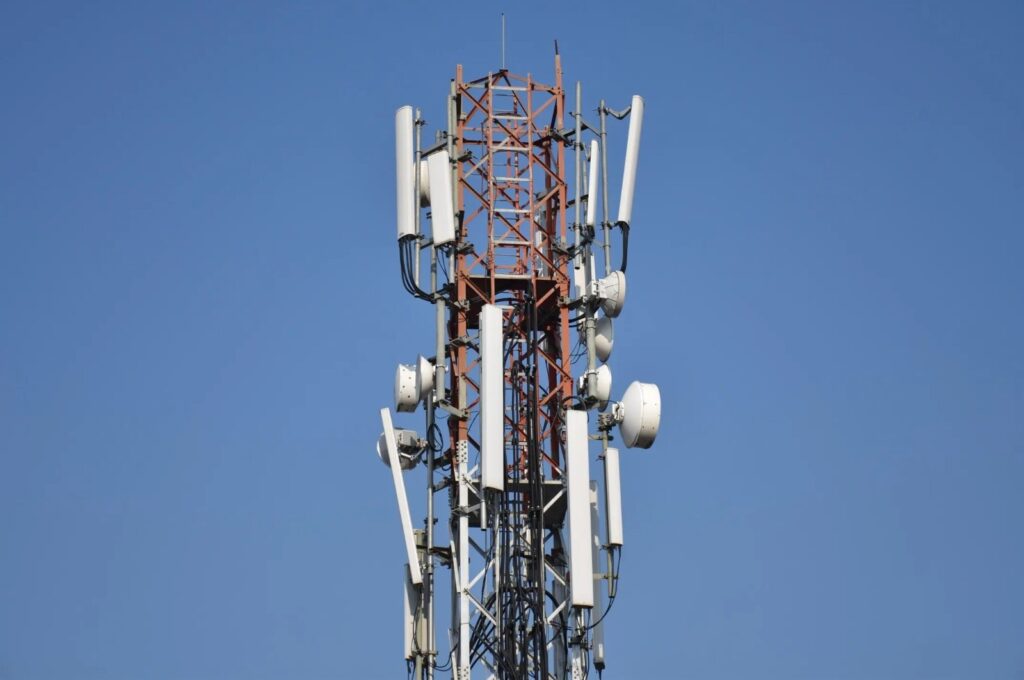
Through the Universal Service Fund, N$31 million has been allocated to roll out the first nine 4G towers by March next year. These will bring services to underserved villages and provide free connectivity to 21 schools and health institutions for seven years.
Also speaking at the event, CRAN Chief Executive Officer Emilia Nghikembua said affordability remains a major challenge, with prepaid customers, who make up the majority of low-income users, paying 15% VAT on services.
She said this makes ICT access more expensive compared to post-paid customers. “We are committed to addressing these challenges and are actively working to reduce, for instance, taxes on smartphones and on services.
We recently learned that post-paid service providers are not charged certain taxes, while prepaid users are. These are some of the anomalies we are trying to address to improve affordability,” she said.